
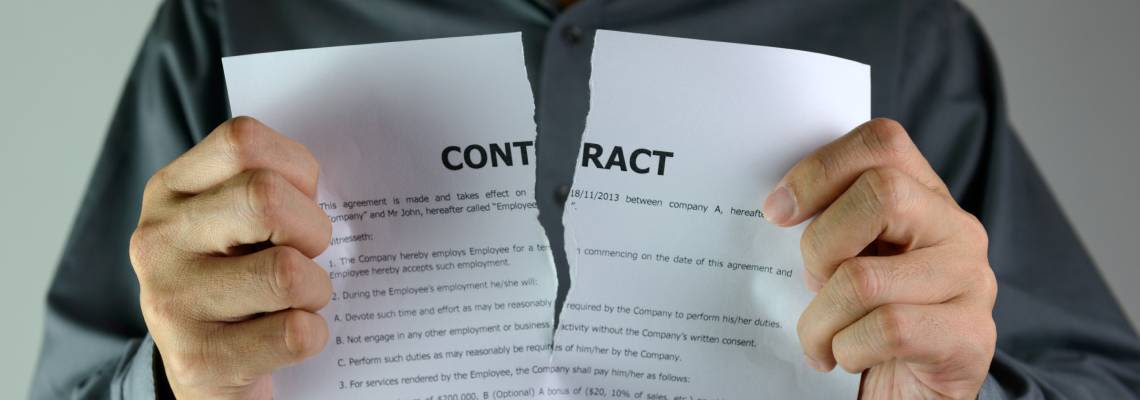
What Remedies Are Available When a Business Contract Is Breached in California?
A supplier misses its delivery deadline, a customer stops paying halfway through a project, or a partner walks away from a signed agreement. In California, the main remedy for a breached business contract is monetary damages to put you in the position you would have been in if the contract had been performed.
In some situations, a court may instead order the other party to perform the agreed-upon services or unwind the deal. Therefore, what you can recover depends on the contract’s terms, your proof, and how you respond after the breach.
The Law Offices of Steven E. Springer represents businesses in San Jose, California, and throughout Santa Clara County in contract disputes, from early negotiations through trial. Before you sue, renegotiate, or terminate an agreement, reach out today to schedule a free 20-minute consultation.
How Does California Measure Damages in Breach of Contract Cases?
Contract damages are meant to compensate, not punish. Under California Civil Code Section 3300, you may be able to recover damages that compensate you for the harm the breach caused, or that would likely result from it in the ordinary course of things. The courts generally sort these losses into two categories: general and consequential damages.
General damages flow directly from the breach, such as an unpaid invoice or the extra cost of hiring a replacement vendor. Consequential damages depend on your circumstances, such as profits from a downstream deal that collapsed.
The courts generally allow recovery of these only if both parties could have foreseen them when they signed the contract. You must also prove lost profits with reasonable certainty, which usually requires financial records rather than projections alone. Check the limitation-of-liability clause early, because it may cap or exclude the losses that matter most to you.
What Can Reduce Your Recovery?
California law generally does not let you recover more than you would have gained if both sides had fully performed. You also have a duty to mitigate. If you could reasonably have reduced your losses, such as by finding a substitute customer, a court may reduce your award accordingly. Documenting what you do after a breach matters as much as documenting the breach itself.
Punitive damages are generally unavailable for breach of contract alone, even if the breach was intentional. They may apply only when the facts support a separate claim, such as fraud.
Some agreements establish set damage amounts in advance through a liquidated damages clause. In most business contracts, California presumes these clauses are valid unless the challenging party shows the amount was unreasonable when the contract was made. A valid clause can simplify recovery, but it can also limit it.
Specific Performance and Rescission
When money would not adequately fix the problem, a court may order specific performance, requiring the breaching party to follow through with the contract. This is more common when the deal involves something unique, such as real property or a particular business interest. California courts will not compel personal services, and the contract’s terms must be definite and fair enough to enforce.
Rescission works in the opposite direction. It cancels the contract and aims to restore both sides to their positions before the deal, and grounds can include fraud, mistake, or failure of consideration.
Because the rescinding party generally must act promptly and offer to return what it received, delay can eliminate this option. An experienced California business litigation attorney can help you decide whether to enforce or unwind a contract when filing a claim.
Attorney Fees and Interest
During breach of contract cases, each party usually pays its own attorney fees unless a contract or statute says otherwise. If your contract has a fee provision, California Civil Code section 1717 generally makes it reciprocal, so the prevailing party may recover reasonable fees even if the clause favored only one side. A fee clause can strengthen a solid claim and raise the cost of a weak one.
Interest can also add to your potential recovery. When a contract does not state an interest rate, California generally applies 10 percent per year after a breach.
What Are the Deadlines to File a Breach of Contract Claim in California?
Under California Code of Civil Procedure Section 337, you generally have four years to sue for breach of a written contract. For oral contracts, the deadline is generally two years. The clock usually starts at the breach, and some contracts require notice, mediation, or arbitration before you can file. Negotiations typically do not stop the clock unless both sides sign a tolling agreement.
Discuss Your Breached Business Contract With Attorney Steven E. Springer
Damages, specific performance, rescission, fee recovery, and filing deadlines depend on your contract's wording and the steps you take after a breach. Seeing how those pieces fit together is often what separates a recoverable claim from a costly misstep.
Attorney Steven E. Springer brings more than 35 years of business and legal experience to those decisions, including more than 20 years in business before he began practicing law. A Santa Clara University School of Law graduate, he has been a member of the California State Bar since 1995.
Attorney Springer works directly with clients to understand the goals behind a dispute, whether the path forward is negotiation, mediation, or trial. He also serves as a Civil Early Settlement Conference Neutral for Santa Clara County, which gives him a close view of how contract disputes resolve.
With offices in San Jose, Morgan Hill, and Fremont, California, the firm serves businesses throughout Santa Clara County. If a contract has been breached, or you have been accused of breaching one, reach out today to schedule a free 20-minute consultation and review the potential remedies that may fit your agreement and goals.